
How Sleep Architecture Can Affect Your Disease Risk
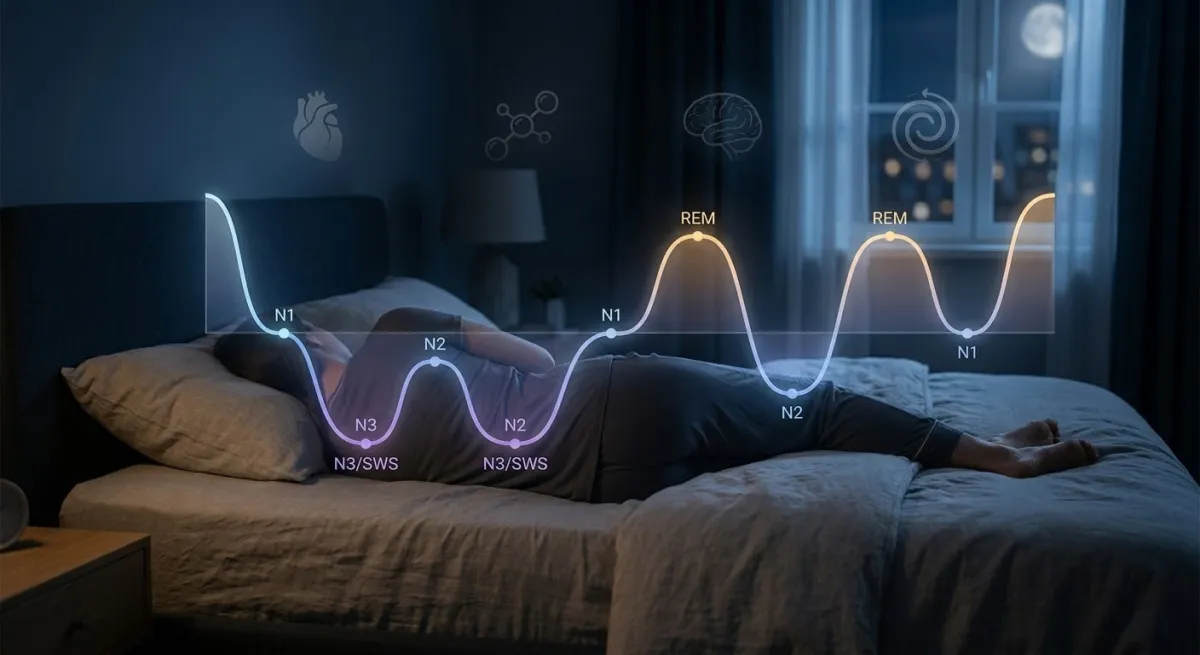
There is far more to sleep and its effects on the human body than just a certain number of hours spent in bed. In fact, throughout an entire night each individual experiences different stages of sleep, with each playing a specific role in maintaining healthy bodily functions. These sleep stages, referred to collectively as a sleep architecture, along with overall sleep quality, have a significant effect on the likelihood of developing chronic disease in the long run.
Below, we explore the concept of sleep architecture, the potential long-term consequences of disrupted sleep patterns, and what can be done to ensure good health.
Sleep Architecture Definition
When studying sleep, scientists typically separate sleep into two broad categories – non–rapid eye movement (NREM) and rapid eye movement (REM) sleep. The former comprises lighter sleep stages and the deepest stage of rest called slow-wave sleep, while the latter is responsible for the majority of vivid dreams and is strongly linked to memory processing, emotional regulation, and learning.
Throughout the night, these stages repeat in a cyclical manner in a particular order, with the duration of each cycle and the distribution of sleep stages varying depending on age, level of stress, overall health, and a variety of other factors.
Long-Term Health Risks and Disease Development
Numerous studies have demonstrated that disrupted and insufficient sleep can lead to hypertension, cardiometabolic dysfunction, emotional instability, irregular glucose metabolism, cognitive decline, obesity, and numerous other health issues.
Below are just several of the most common health consequences that may arise due to disrupted sleep patterns:
Cardiovascular Disease
Healthy sleep architecture plays a crucial role in maintaining heart health and reducing cardiometabolic risk. Therefore, not getting enough quality sleep or constantly experiencing disrupted, fragmented, or shortened sleep may raise blood pressure and disrupt normal cardiovascular functions, increasing the risk of developing cardiovascular disease. For instance, sleep apnea, a common sleep disorder characterized by interrupted breathing during sleep, often leads to severe cardiovascular complications if left untreated.
Obesity and Disrupted Glucose Metabolism
Altered sleep patterns can lead to significant physiological and psychological changes in the human body, including weight gain, increased risk of obesity, and disrupted glucose metabolism. Due to the complex interaction between sleep, appetite regulation, and overall health, chronic sleep deprivation or poor-quality sleep often leads to obesity, especially when combined with a sedentary lifestyle and unhealthy diet.
Cognitive Decline
As mentioned above, sleep is strongly linked to learning, memory, and emotional regulation. Therefore, chronic lack of sleep or poor-quality sleep often leads to impairments in cognitive performance, including poor concentration, reduced memory, slowed processing speed, poor mood, and severe daytime sleepiness.
Moreover, researchers have also established a link between disrupted or shortened sleep and increased risk of neurodegenerative diseases.
In addition to the health consequences listed above, disrupted or shortened sleep can lead to numerous other adverse effects, including impaired immunity, increased risk of metabolic syndrome, endocrine dysfunction, and many others.
What Causes Poor Sleep?
There are numerous factors that may contribute to disrupted or poorer quality sleep, including chronic stress, irregular sleep schedules, inadequate nighttime sleep hygiene, consumption of stimulants such as caffeine, alcohol abuse, excessive screen time before bedtime, as well as chronic pain and certain sleep disorders.
How to Ensure Good Sleep Patterns?
It is commonly recommended to get at least seven hours of sleep per night, with most adults needing around eight hours of good quality sleep.
However, in addition to the required amount of nightly sleep, individual sleep patterns also play an important role in maintaining good health.
Therefore, it is critical to maintain a regular sleep schedule, avoid stimulants before bedtime, ensure good sleep hygiene, engage in regular physical activity, and a number of other important health and sleep maintenance measures.
People who experience chronic sleep deprivation, nightmares, and daytime drowsiness despite sufficient nighttime sleep should consult with their primary physician to rule out the possibility of developing a serious sleep disorder.
Conclusion
We hope that this article has demonstrated how vital good sleep hygiene is in terms of preventing a large number of health conditions associated with chronic sleep loss or disruption of normal sleep cycles. Keeping good sleep patterns is essential for maintaining good health throughout life as well as preventing chronic disease development and progression.
Medical Disclaimer
The information provided in this article is solely for educational purposes and cannot be considered as medical advice. Individuals who suspect that they may have a sleep disorder or chronic disease should consult with a qualified healthcare professional.



Leave a Comment