

Nutrient Absorption: Causes, Symptoms & Signs of Malabsorption
Eating a healthy, balanced diet is an important part of good nutrition. But eating nutritious food is only one part of the process.
Your body must also digest food and absorb nutrients properly so that vitamins, minerals, protein, carbohydrates, fats, and other nutrients can be used.
Sometimes, a person may eat a reasonably healthy diet but still develop nutrient deficiencies because the digestive system is not properly digesting or absorbing nutrients.
This problem is known as malabsorption.
Poor nutrient absorption can be related to problems involving the small intestine, digestive enzymes, pancreas, liver, or other parts of the gastrointestinal system. Some infections, digestive diseases, food intolerances, medications, and other health conditions can also affect digestion or nutrient absorption.
Understanding the causes and symptoms of poor nutrient absorption can help you recognize when persistent digestive or nutritional problems need medical evaluation.
What Is Nutrient Absorption?
Nutrient absorption is the process through which nutrients from digested food pass through the digestive system and become available for the body to use.
Digestion breaks food into smaller components. The digestive tract then absorbs nutrients such as:
- Protein and amino acids
- Carbohydrates and sugars
- Fats
- Vitamins
- Minerals
- Water
- Electrolytes
- Other nutrients
The small intestine plays a particularly important role because most nutrients from food are absorbed there.
When the body cannot properly digest or absorb one or more nutrients, the problem may be described as malabsorption.
Malabsorption can affect one specific nutrient or several nutrients at the same time, depending on the underlying cause.
For example, some pancreatic disorders can interfere with digestion and may result in low levels of fat-soluble vitamins such as vitamins A, D, E, and K.
Why Can a Healthy Diet Still Lead to Nutrient Deficiency?
A healthy diet provides nutrients, but the body still needs a properly functioning digestive system to make those nutrients available.
This means someone can consume nutritious foods and still develop nutritional problems if an underlying condition interferes with digestion or absorption.
Possible causes include:
- Diseases affecting the small intestine
- Celiac disease
- Crohn's disease
- Pancreatic disorders
- Short bowel syndrome
- Certain gastrointestinal infections
- Food intolerances
- Problems involving digestive enzymes
- Problems affecting bile or fat digestion
- Some medications
- Other gastrointestinal conditions
The specific cause matters because treatment for malabsorption depends on the underlying problem.
Hidden Causes of Poor Nutrient Absorption
1. Gastrointestinal Diseases
Some gastrointestinal diseases can interfere with normal nutrient absorption.
Conditions affecting the small intestine can be particularly important because the small intestine is where most nutrients are absorbed.
Examples include:
- Celiac disease
- Crohn's disease
- Short bowel syndrome
- Certain intestinal disorders
- Other conditions that damage or affect the small intestine
Celiac disease, for example, can cause digestive symptoms including chronic diarrhea, bloating, gas, abdominal pain, and loose or greasy stools. It can also interfere with nutrient absorption.
Crohn's disease can also affect the digestive tract and may contribute to nutritional problems depending on where and how extensively the gastrointestinal tract is affected.
2. Pancreatic Problems
The pancreas produces digestive enzymes that help break down food.
When the pancreas does not produce enough digestive enzymes, food may not be properly digested and the small intestine may not absorb enough nutrients.
One example is exocrine pancreatic insufficiency, also called EPI.
Possible symptoms of EPI include:
- Bloating
- Abdominal discomfort
- Diarrhea
- Loose or greasy stools
- Excess gas
- Weight loss
Pancreatic problems can also contribute to low levels of fat-soluble vitamins A, D, E, and K.
3. Gastrointestinal Infections
Some intestinal infections can temporarily affect digestion and nutrient absorption.
Infections may damage or disturb the intestinal lining and can cause diarrhea. Prolonged diarrhea can contribute to loss of fluids and electrolytes and may also be associated with malabsorption.
If diarrhea continues for an extended period, it should not automatically be blamed on food choices.
Persistent digestive symptoms may require medical evaluation to identify the underlying cause.
4. Food Intolerances
Food intolerances can cause digestive symptoms and may sometimes affect nutritional intake.
Lactose intolerance is one common example.
People with lactose intolerance have difficulty digesting lactose because the small intestine does not produce enough lactase to break down all the lactose consumed.
Symptoms may include:
- Bloating
- Gas
- Diarrhea
- Nausea
- Abdominal discomfort
Lactose intolerance is different from a milk allergy.
If someone avoids dairy products completely, they also need to make sure they obtain enough nutrients such as calcium and vitamin D from suitable foods or alternatives.
5. Medications and Other Health Conditions
Some medications and medical conditions can affect digestion, nutrient levels, or the body's ability to absorb particular nutrients.
The effect depends on the medication, dose, duration of use, and individual health circumstances.
For this reason, unexplained vitamin or mineral deficiencies should not automatically be blamed on an unhealthy diet.
A healthcare professional can help determine whether a medication, digestive condition, dietary issue, or another factor could be involved.
What Are the Signs of Poor Nutrient Absorption?
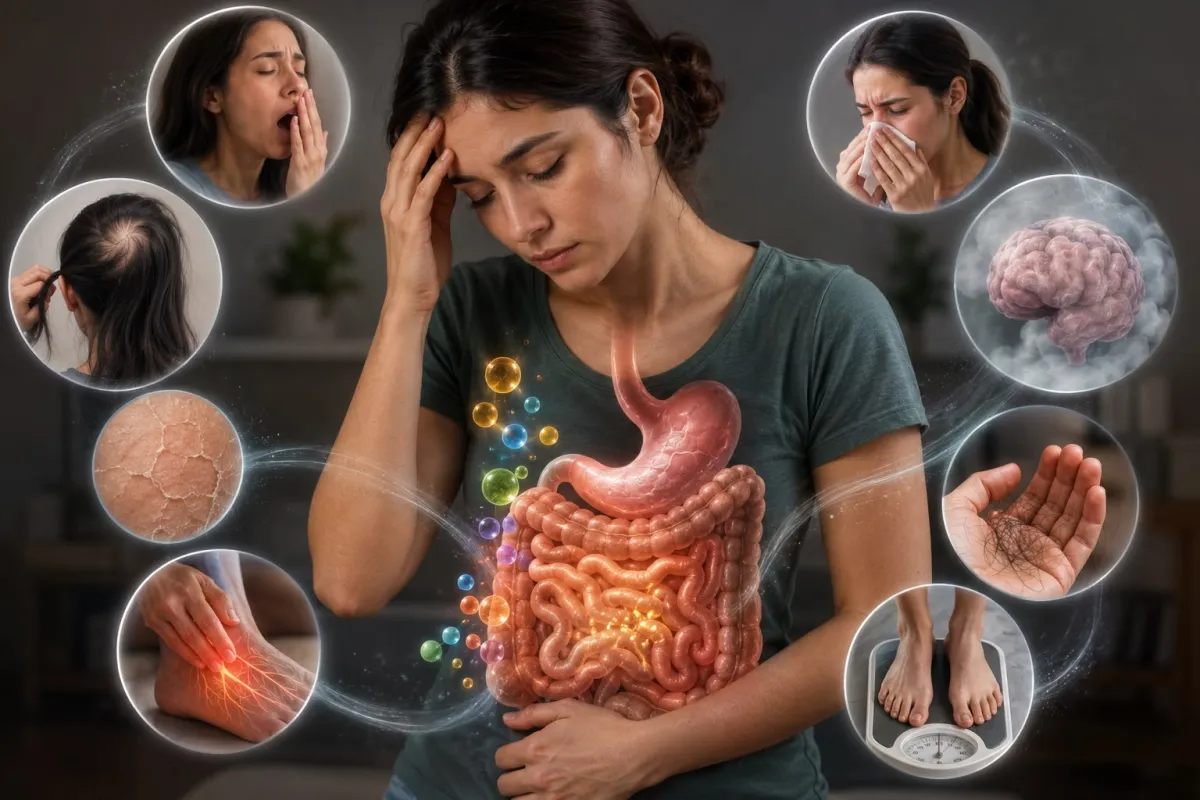
The symptoms of malabsorption can vary depending on the cause and the nutrients affected.
Possible signs include:
- Persistent diarrhea
- Loose stools
- Greasy or oily stools
- Foul-smelling bowel movements
- Abdominal bloating
- Excess gas
- Abdominal discomfort
- Unintentional weight loss
- Difficulty maintaining weight
- Fatigue
- Weakness
- Signs of vitamin or mineral deficiency
NIDDK notes that malabsorption can be associated with bloating, gas, loose or greasy foul-smelling bowel movements, and weight loss.
However, these symptoms are not specific to malabsorption.
For example, fatigue, bloating, diarrhea, and weight changes can have many possible causes.
That is why persistent symptoms should be evaluated rather than assuming that poor nutrient absorption is the explanation.
Greasy Stools and Nutrient Absorption
One symptom that can occur with some forms of malabsorption is loose, greasy, or unusually foul-smelling stool.
This can be particularly relevant when the body has difficulty digesting or absorbing dietary fat.
Pancreatic disorders are one possible cause of this type of digestive problem.
However, stool changes alone cannot diagnose malabsorption.
If greasy stools continue or occur together with weight loss, diarrhea, abdominal symptoms, or nutritional deficiencies, medical evaluation is appropriate.
Unexplained Weight Loss and Poor Nutrient Absorption
Unintentional weight loss can sometimes occur when the body is not absorbing enough nutrients or calories.
For example, malabsorption associated with certain intestinal or pancreatic conditions can result in weight loss despite a person's normal or adequate food intake.
But unexplained weight loss has many possible causes.
If you are losing weight without intentionally changing your diet or activity level, it is important to discuss the symptom with a healthcare professional rather than assuming that malabsorption is the cause.
Which Nutrient Deficiencies Can Malabsorption Cause?
The nutritional effects of malabsorption depend on which nutrients are affected.
Possible deficiencies may involve:
Iron
Poor iron absorption can contribute to iron deficiency and, in some cases, iron-deficiency anemia.
Vitamin B12
Certain gastrointestinal conditions can interfere with vitamin B12 absorption.
Folate
Problems affecting the digestive tract may contribute to folate deficiency.
Calcium
Reduced nutrient absorption or dietary restrictions can affect calcium intake or status.
Vitamin D
Vitamin D deficiency may occur for many reasons, including some conditions affecting digestion or fat absorption.
Vitamins A, D, E, and K
These are fat-soluble vitamins. Certain pancreatic and digestive disorders can interfere with their absorption.
For example, NIDDK notes that exocrine pancreatic insufficiency can lead to low levels of fat-soluble vitamins A, D, E, and K.
Can You Have a Nutrient Deficiency Despite Eating Healthy?
Yes, it is possible.
A healthy diet can provide a wide range of nutrients, but nutrient status is influenced by more than food intake.
Digestive health, absorption, medical conditions, medications, and individual nutritional needs can all matter.
This is why a person with a nutrient deficiency despite eating a healthy diet may need medical evaluation to identify the reason.
Simply eating more of the same foods may not solve a problem caused by an underlying digestive disorder.
How Can You Support Healthy Nutrient Absorption?
For most people, a varied and balanced diet is an important foundation for good nutrition.
Depending on individual dietary needs, nutritious foods can include:
- Vegetables
- Fruits
- Legumes
- Whole grains
- Eggs
- Dairy products or suitable alternatives
- Fish
- Meat
- Nuts
- Seeds
For people in Pakistan, familiar foods such as:
- Daal
- Chana
- Rajma
- Beans
- Leafy green vegetables
- Seasonal fruits
- Whole wheat foods
- Eggs
- Milk
- Yogurt
- Fish
- Meat
- Nuts
- Seeds
can all contribute to a varied diet.
However, diet changes alone may not correct malabsorption caused by a medical condition.
Treatment depends on the underlying cause.
Nutrient Absorption and Food Combinations
The way foods are combined can also influence the absorption of certain nutrients.
For example, vitamin C can improve the absorption of non-heme iron from plant foods.
This means meals such as:
Daal + lemon
Lentils + tomatoes
Chickpeas + bell peppers
can combine plant-based iron with a source of vitamin C.
Dietary fat also plays a role in the absorption of fat-soluble vitamins.
If you want to learn more about this topic, read our related HealthSplatter article:
Food Synergy: Nutrient Combinations to Aid Natural Absorption
Understanding food combinations can be useful, but food combinations should not be considered a treatment for an established nutrient deficiency or digestive disease.
Nutrient Absorption and Digestive Health
Good nutrition and digestive health are closely connected.
Your body needs to digest food properly and absorb nutrients before those nutrients can be used.
Digestive symptoms such as chronic diarrhea, bloating, gas, greasy stools, and unexplained weight loss can sometimes indicate an underlying gastrointestinal problem.
This is why persistent digestive symptoms should not simply be ignored.
A Healthy Diet Is Still Important
Poor nutrient absorption does not mean that diet is unimportant.
A balanced diet remains important for providing:
- Protein
- Fiber
- Vitamins
- Minerals
- Healthy fats
- Carbohydrates
- Other essential nutrients
However, if an underlying medical condition is affecting absorption, a person may need additional medical or nutritional support.
The goal should be to identify and manage the underlying problem rather than simply adding more foods or supplements.
When Should You See a Doctor?
Consider speaking with a qualified healthcare professional if you experience:
- Persistent diarrhea
- Repeated greasy or oily stools
- Unexplained weight loss
- Difficulty maintaining your weight
- Ongoing abdominal discomfort
- Persistent bloating
- Recurrent nutritional deficiencies
- Unexplained fatigue or weakness
- Symptoms that continue despite dietary changes
A healthcare professional may review your symptoms, medical history, diet, medications, and other factors.
Depending on the suspected cause, evaluation may include blood tests, stool tests, or other investigations.
There is no single malabsorption test that is appropriate for everyone. The tests depend on the person's symptoms and suspected underlying condition.
For example, evaluation for celiac disease, pancreatic problems, or other digestive conditions may require different approaches.
Can Supplements Fix Poor Nutrient Absorption?
Not necessarily.
Supplements can provide specific nutrients, but they do not automatically correct the underlying cause of malabsorption.
For example, if a digestive disorder is preventing normal absorption, simply taking more vitamins may not solve the problem.
Some supplements can also cause side effects or interact with medications.
If you suspect a vitamin or mineral deficiency, it is better to discuss testing and treatment with a qualified healthcare professional rather than taking high-dose supplements without guidance.
Common Misconceptions About Nutrient Absorption
"I eat healthy, so I cannot have a nutrient deficiency."
Not necessarily.
Nutrient deficiencies can have multiple causes, including problems with digestion or absorption.
"Bloating always means I have malabsorption."
No.
Bloating has many possible causes and does not by itself diagnose malabsorption.
"Greasy stools always mean my pancreas is not working."
Not necessarily.
Greasy stools can occur for different reasons and require proper evaluation.
"Taking more vitamins will solve the problem."
Not always.
If an underlying condition is affecting nutrient absorption, treating the cause may be more important than simply increasing supplement intake.
"I should remove all dairy if milk causes digestive symptoms."
Not necessarily.
People with lactose intolerance may be able to tolerate some lactose, and completely avoiding dairy may reduce calcium and vitamin D intake unless suitable alternatives are included.
Frequently Asked Questions
What is poor nutrient absorption?
Poor nutrient absorption, or malabsorption, occurs when the body cannot properly absorb enough nutrients from food.
What are the most common symptoms of malabsorption?
Possible symptoms include chronic diarrhea, bloating, gas, loose or greasy stools, weight loss, fatigue, and signs of nutrient deficiency.
Why is my body not absorbing nutrients properly?
Possible causes include digestive diseases, intestinal conditions, infections, pancreatic problems, food intolerances, and other medical conditions. The cause cannot be determined from symptoms alone.
Can diarrhea cause nutrient malabsorption?
Chronic diarrhea can be associated with malabsorption and can also lead to loss of fluids and electrolytes.
Can celiac disease cause poor nutrient absorption?
Yes. Celiac disease can affect the small intestine and may cause digestive symptoms and problems related to nutrient absorption.
Can pancreatic problems affect nutrient absorption?
Yes. Certain pancreatic disorders can interfere with digestion and may lead to malabsorption and deficiencies of fat-soluble vitamins.
Can lactose intolerance cause nutrient problems?
Lactose intolerance can make it harder for some people to consume enough calcium and vitamin D if dairy foods are significantly restricted without suitable alternatives.
Can you have nutrient deficiency while eating healthy?
Yes. Nutrient deficiencies can have causes other than inadequate food intake, including problems with digestion or nutrient absorption.
What foods improve nutrient absorption?
Some food combinations can support absorption of particular nutrients. For example, vitamin-C-rich foods can improve absorption of non-heme iron from plant foods.
When should I see a doctor for possible malabsorption?
Seek medical advice if you have persistent diarrhea, unexplained weight loss, repeated greasy stools, ongoing digestive symptoms, or suspected nutrient deficiencies.
The Takeaway
Eating a healthy diet is important, but healthy eating and nutrient absorption are not exactly the same thing.
Your body needs to digest food and absorb nutrients properly before it can use them.
Problems involving the small intestine, digestive tract, pancreas, infections, food intolerances, and other medical conditions can interfere with nutrient absorption and may contribute to nutritional deficiencies.
Possible signs of poor nutrient absorption include:
- Persistent diarrhea
- Greasy or foul-smelling stools
- Bloating and gas
- Unexplained weight loss
- Fatigue
- Difficulty maintaining weight
- Signs of vitamin or mineral deficiency
These symptoms can have many causes, so they should not be used to diagnose malabsorption on their own.
The most practical approach is to maintain a varied diet while paying attention to persistent digestive or nutritional problems. If symptoms continue, a qualified healthcare professional can help determine whether a digestive disorder, nutrient deficiency, medication, or another health condition may be involved.


Leave a Comment