
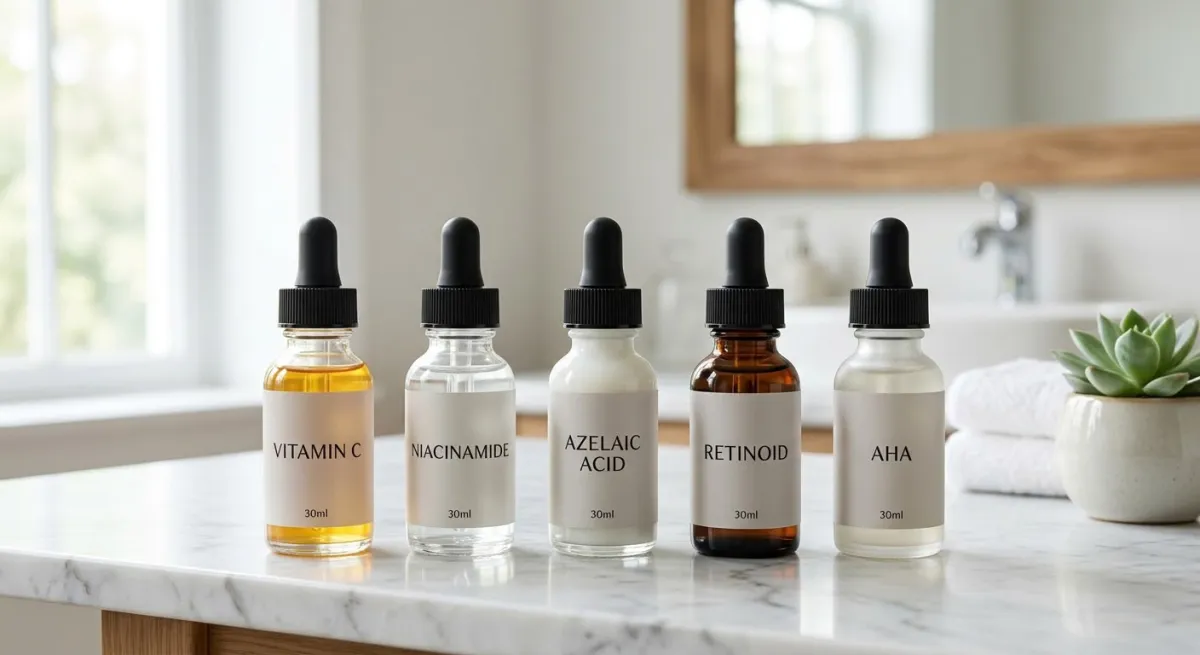
Ingredients That Actually Help With Brightening Skin Tone
Uneven skin tone, dark spots, and post-acne marks are common skincare concerns. With so many "brightening" products available, it can be difficult to know which ingredients have evidence behind them and how to use them safely.
The goal of a brightening routine should not be to change your natural skin color. Instead, effective skincare aims to reduce the appearance of hyperpigmentation, help even out skin tone, and protect the skin from additional UV-related pigmentation.
Different ingredients work in different ways, and results usually take time. Using too many active ingredients at once can also irritate the skin and potentially make pigmentation more noticeable.
1. Vitamin C
Vitamin C is an antioxidant commonly used in skincare. Topical vitamin C may help improve the appearance of hyperpigmentation while supporting the skin's response to environmental oxidative stress.
Different vitamin C formulations vary in stability, concentration, and tolerability. Some products can cause irritation, particularly when used at higher concentrations.
If you are new to vitamin C, consider introducing one product gradually and follow the manufacturer's instructions. Stop using it if significant irritation develops.
2. Niacinamide
Niacinamide, also called nicotinamide, is a form of vitamin B3 used in many skincare products.
It can support the skin barrier and may help improve the appearance of hyperpigmentation. It is generally considered a well-tolerated cosmetic ingredient, although irritation or allergic reactions can still occur with any topical product.
A simple routine containing niacinamide may be a reasonable option for people who want to address uneven-looking skin while maintaining the skin barrier.
3. Azelaic Acid
Azelaic acid is a topical ingredient used to treat acne and certain pigmentation concerns. It also has anti-inflammatory properties.
Because inflammation can contribute to post-inflammatory hyperpigmentation, treating the underlying acne or inflammatory skin condition can be an important part of improving dark marks.
Azelaic acid can cause burning, stinging, dryness, or irritation in some people. Introduce it gradually and follow the instructions of the specific product or prescription provided by your healthcare professional.
4. Retinoids
Retinoids are vitamin A derivatives used in dermatology for conditions including acne and photoaging. Some topical retinoids can also help improve uneven pigmentation and skin texture over time.
Retinoids can initially cause dryness, redness, peeling, or irritation. Starting gradually and using an appropriate moisturizer can help improve tolerability.
Because irritation itself can worsen pigmentation in some people, more aggressive use does not necessarily produce better results.
Anyone who is pregnant or planning pregnancy should discuss retinoid use with a healthcare professional. Topical retinoids are generally avoided during pregnancy as a precaution.
5. Alpha Hydroxy Acids
Alpha hydroxy acids (AHAs), such as glycolic acid and lactic acid, exfoliate the outer layers of the skin.
They can improve skin texture and may help reduce the appearance of some types of uneven pigmentation. However, stronger concentrations and excessive use can cause irritation.
Irritated skin may become more sensitive and can develop or worsen pigmentation, particularly in people prone to post-inflammatory hyperpigmentation.
For this reason, gentle and gradual use is generally preferable to repeatedly applying strong exfoliating products.
Sunscreen Is Essential
Sunscreen is one of the most important parts of managing hyperpigmentation.
UV exposure can contribute to the development and persistence of dark spots. Daily broad-spectrum sunscreen can help protect the skin and reduce additional sun-related pigmentation. The American Academy of Dermatology recommends broad-spectrum, water-resistant sunscreen with SPF 30 or higher.
For people dealing with melasma or certain forms of hyperpigmentation, visible light can also contribute to pigmentation. Tinted sunscreens containing iron oxides may provide additional protection against visible light.
Sunscreen should be applied according to the product instructions and reapplied when appropriate, especially during prolonged outdoor exposure.
Don't Overdo Active Ingredients
Using several active ingredients at the same time does not necessarily make a skincare routine more effective.
Combining vitamin C, retinoids, AHAs, azelaic acid, and other exfoliating products without considering skin tolerance can increase irritation.
A simpler routine is often easier to maintain.
For example, a basic routine may include:
Morning
- Gentle cleanser
- One chosen active ingredient, if appropriate
- Moisturizer
- Broad-spectrum SPF 30+ sunscreen
Evening
- Gentle cleanser
- One treatment product
- Moisturizer
There is no need to use every brightening ingredient simultaneously. Introduce products gradually so you can identify which products your skin tolerates.
Be Careful With Unregulated Skin-Lightening Products
Not every product marketed as a "whitening" or "bleaching" cream is safe.
Some illegally manufactured or improperly labeled products may contain harmful ingredients or undisclosed medicines. The FDA has warned about skin-lightening products containing mercury, while inappropriate use of potent topical corticosteroids can also cause significant skin problems.
Avoid products that do not clearly disclose their ingredients, especially products making dramatic promises about permanently changing natural skin color.
If a product causes significant burning, swelling, severe redness, or other concerning reactions, stop using it and seek appropriate medical advice.
When Should You See a Dermatologist?
Not every dark patch has the same cause.
Hyperpigmentation can occur after acne or inflammation, with melasma, after certain skin injuries, or as a result of other conditions or medications.
A dermatologist can help determine the likely cause and recommend an appropriate treatment plan.
Professional evaluation is particularly important when pigmentation is persistent, rapidly changing, unexplained, or associated with other skin symptoms.
The Takeaway
Vitamin C, niacinamide, azelaic acid, retinoids, and AHAs are commonly used ingredients that may help improve the appearance of uneven skin tone or certain types of pigmentation.
However, results take time, and the best treatment depends on the cause of the pigmentation and your skin type.
A simple routine, gradual introduction of active ingredients, adequate moisturization, and daily broad-spectrum sunscreen can provide a safer foundation than using many aggressive products at once.
If persistent or severe pigmentation does not improve, a qualified dermatologist can determine the underlying cause and recommend evidence-based treatment.


Leave a Comment